Five minutes, top to bottom, the same order as your sidebar. Each stop
links to a short guide if you want the detail.
01
Dashboard
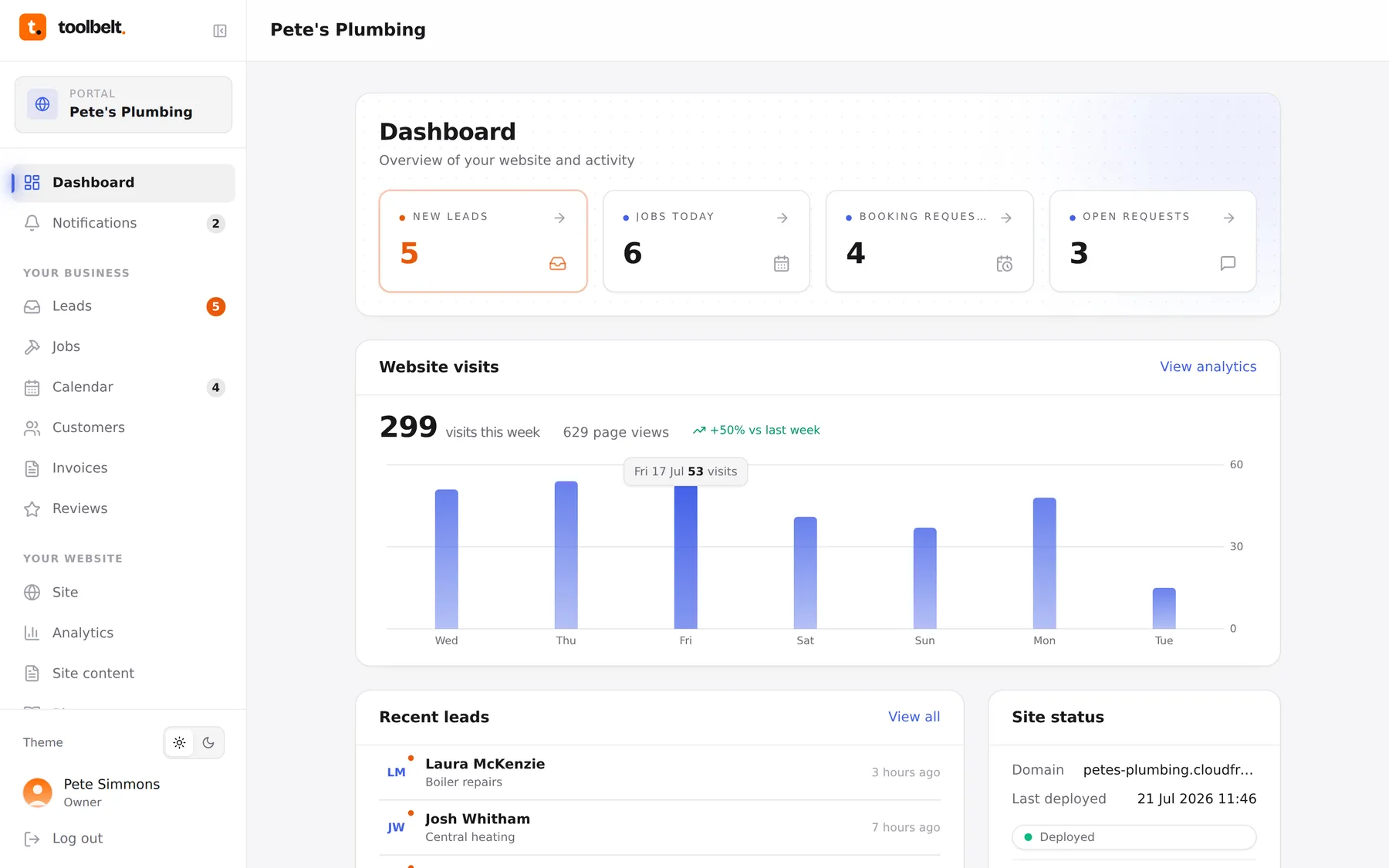
The morning glance. New leads, today's jobs, booking requests and open requests along the top, each number is a shortcut to the page behind it. Below: this week's website visits against last week's, your latest enquiries, your site's live status, today's diary and your recent posts. If nothing on here is orange, put the phone down and go to work.
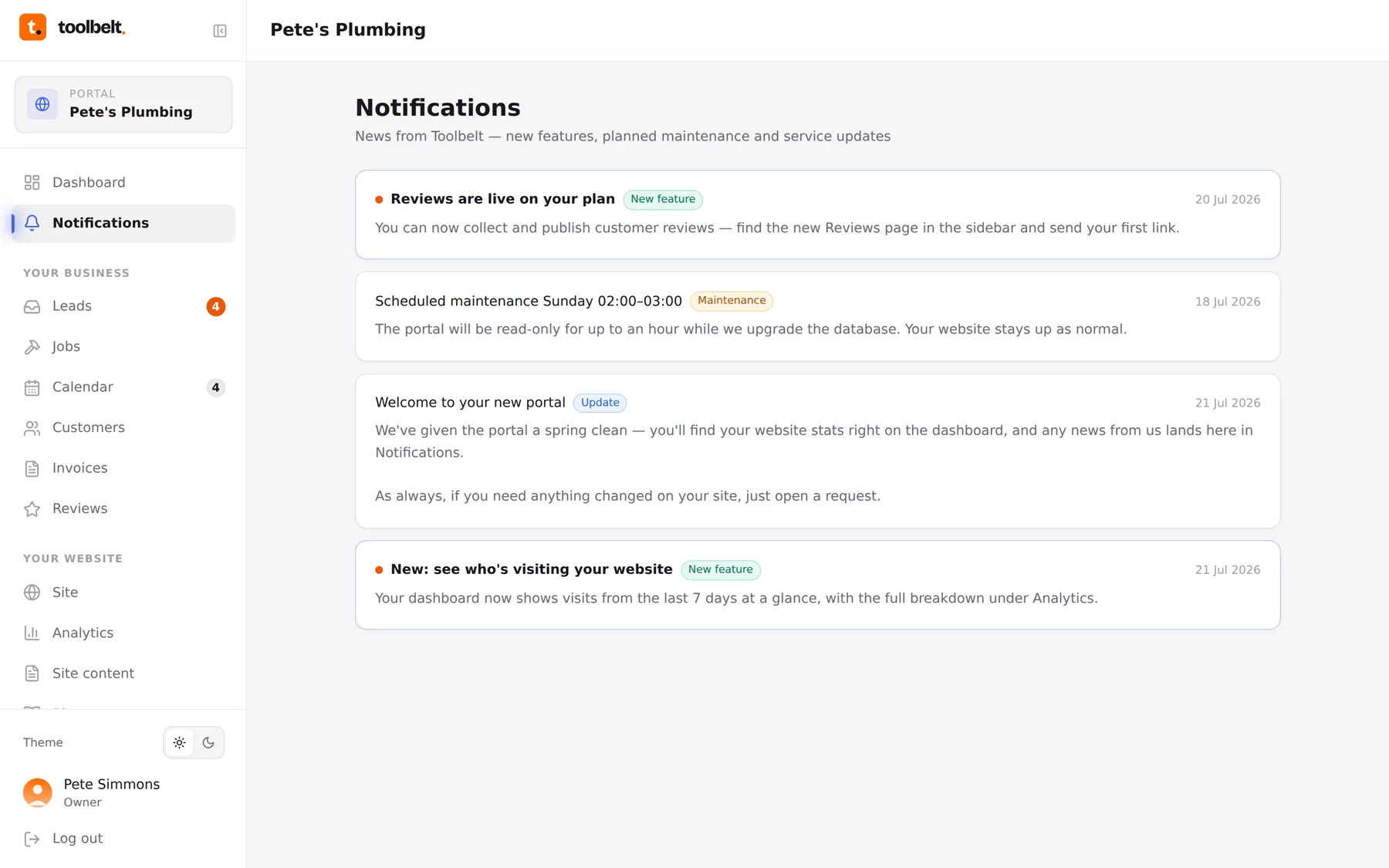
Announcements from us to you: new features, planned maintenance, billing notices. Opening the page marks everything read. It's a noticeboard, not an inbox, anything you want to say back goes through Requests.
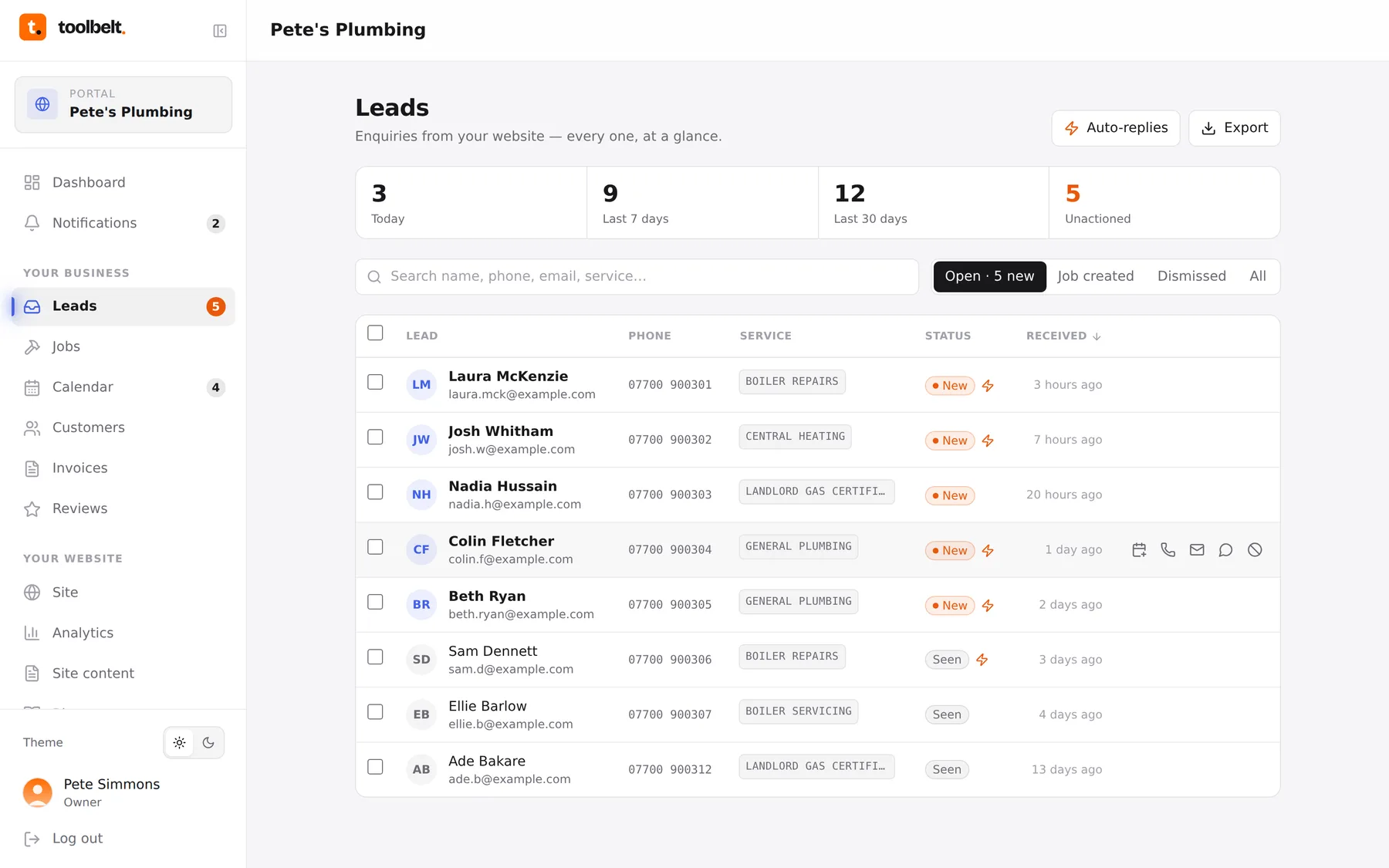
Every enquiry from your website's forms, newest first, unread in orange. Open one to ring the customer back, then convert it to a job with everything pre-filled, or dismiss it and move on. Auto-replies live here too, so every enquirer hears back within seconds even when you're mid-job.
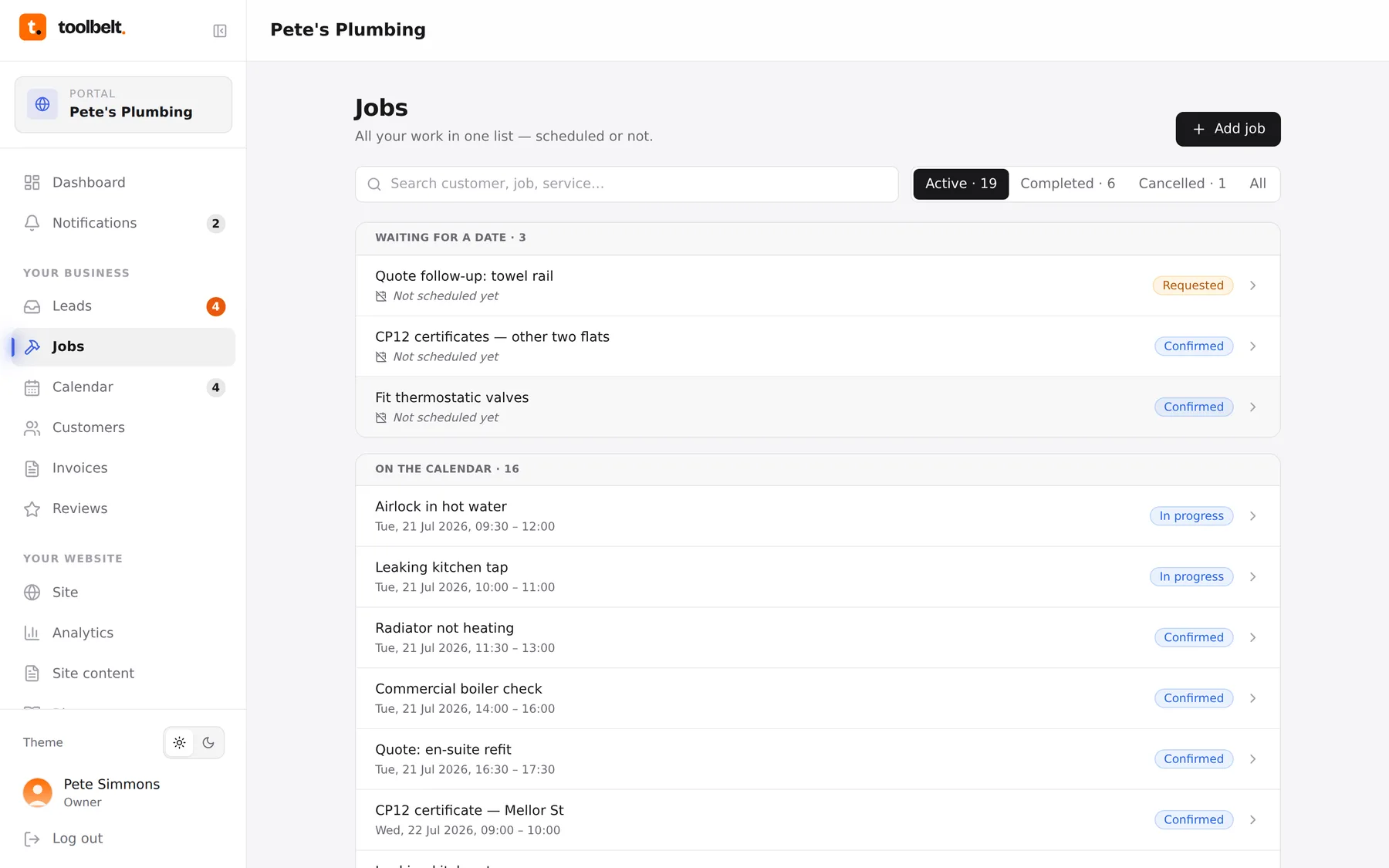
The master list of every job, active, completed, cancelled, with the active pile split into "on the calendar" and "waiting for a date". Tap any job to edit it, move its status along, see its full history or invoice it. This page is the truth about your workload.
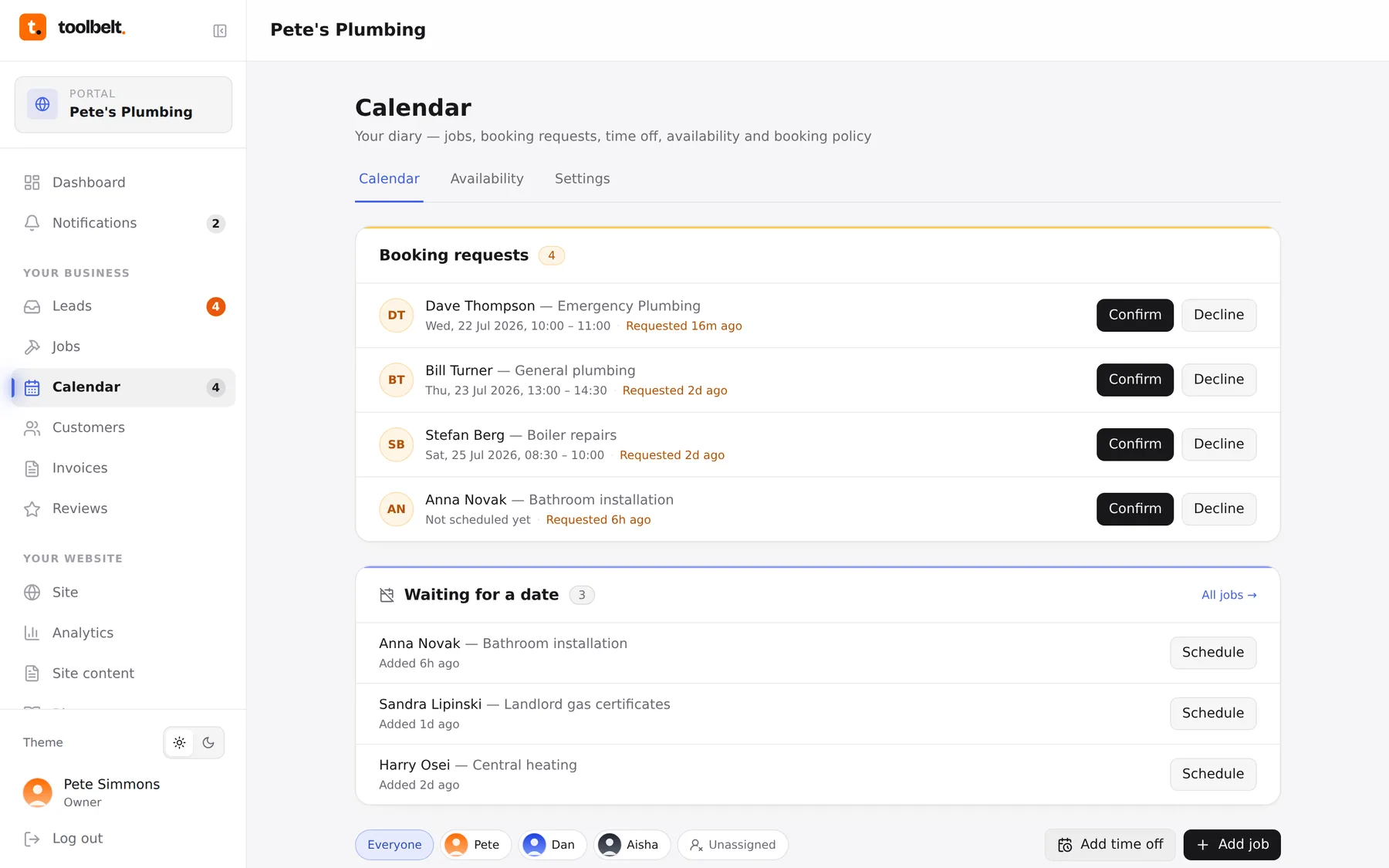
Your diary. Week view on the desk, day view in the van, jobs colour-coded by status. Booking requests queue above the grid for a yes or no; unscheduled jobs wait in their tray; the team bar filters the week per person. The Availability and Settings tabs decide what customers can book from your website, hours, notice, buffers, auto-confirm.
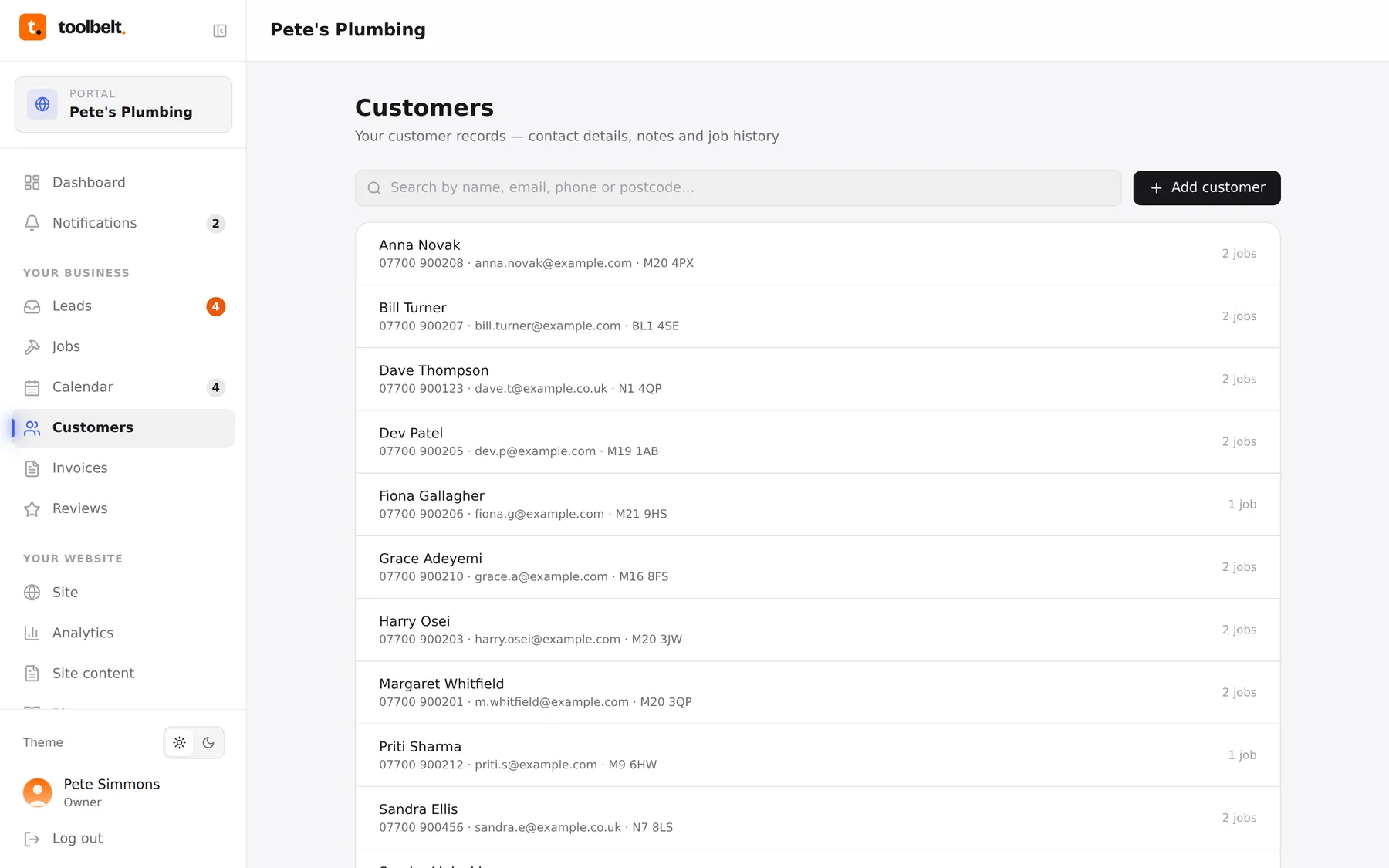
Your address book with a memory: contact details, your private notes, and every job you've done for each person. It builds itself as enquiries convert and jobs get booked, your only job is to keep the notes honest.
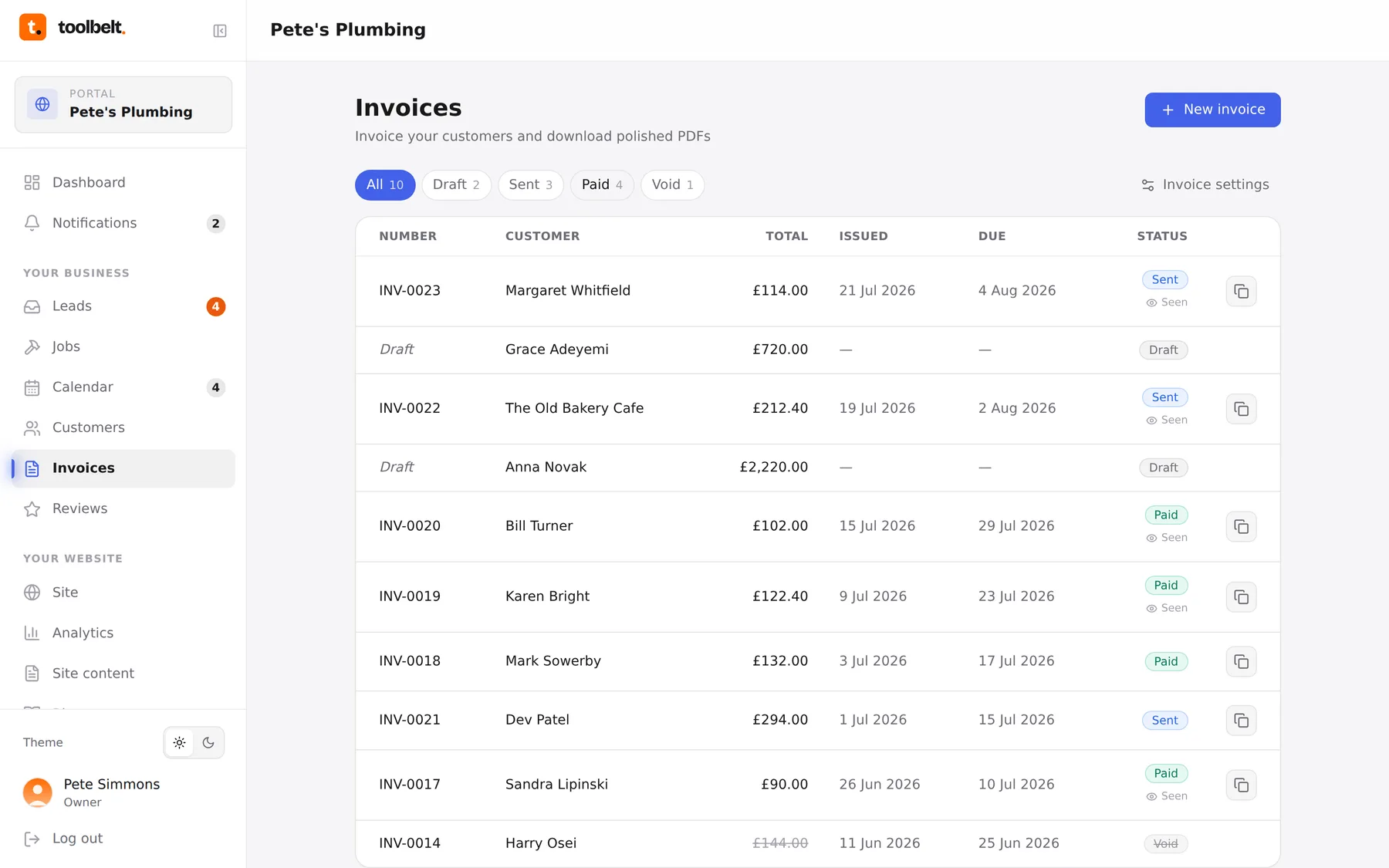
Invoice your customers with proper PDFs, numbered, VAT-aware, carrying your details from Invoice settings. Drafts stay private until you finalise; sent invoices get a share link that shows you when the customer opened it. The filter chips are your cash-flow report: Sent is the pile to chase.
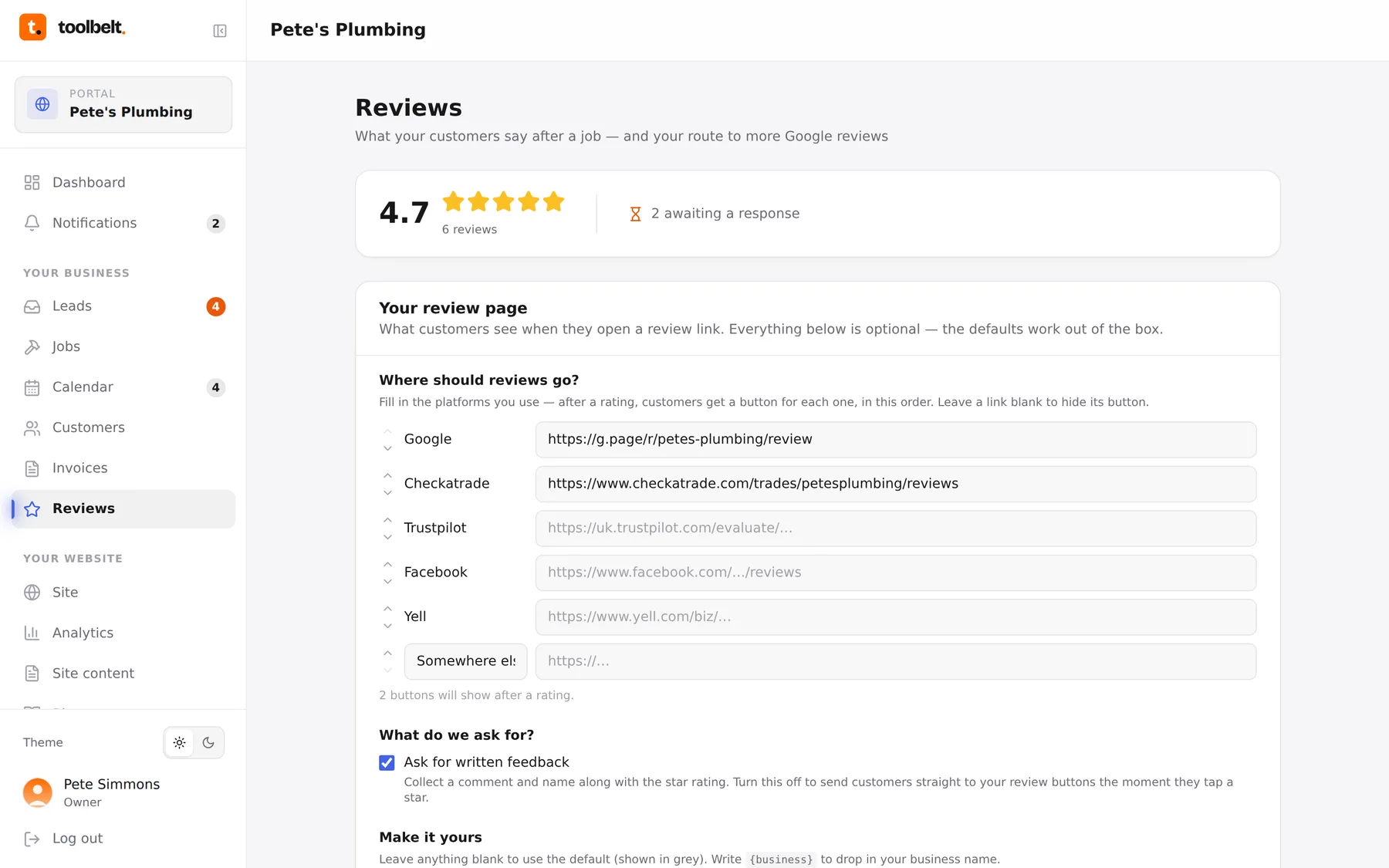
Send a review link after each completed job; customers tap a star rating and get walked on to Google, Checkatrade or wherever you've pointed them. The page tracks your average, who's still to respond, and who actually clicked through, your reputation, on purpose instead of by accident.
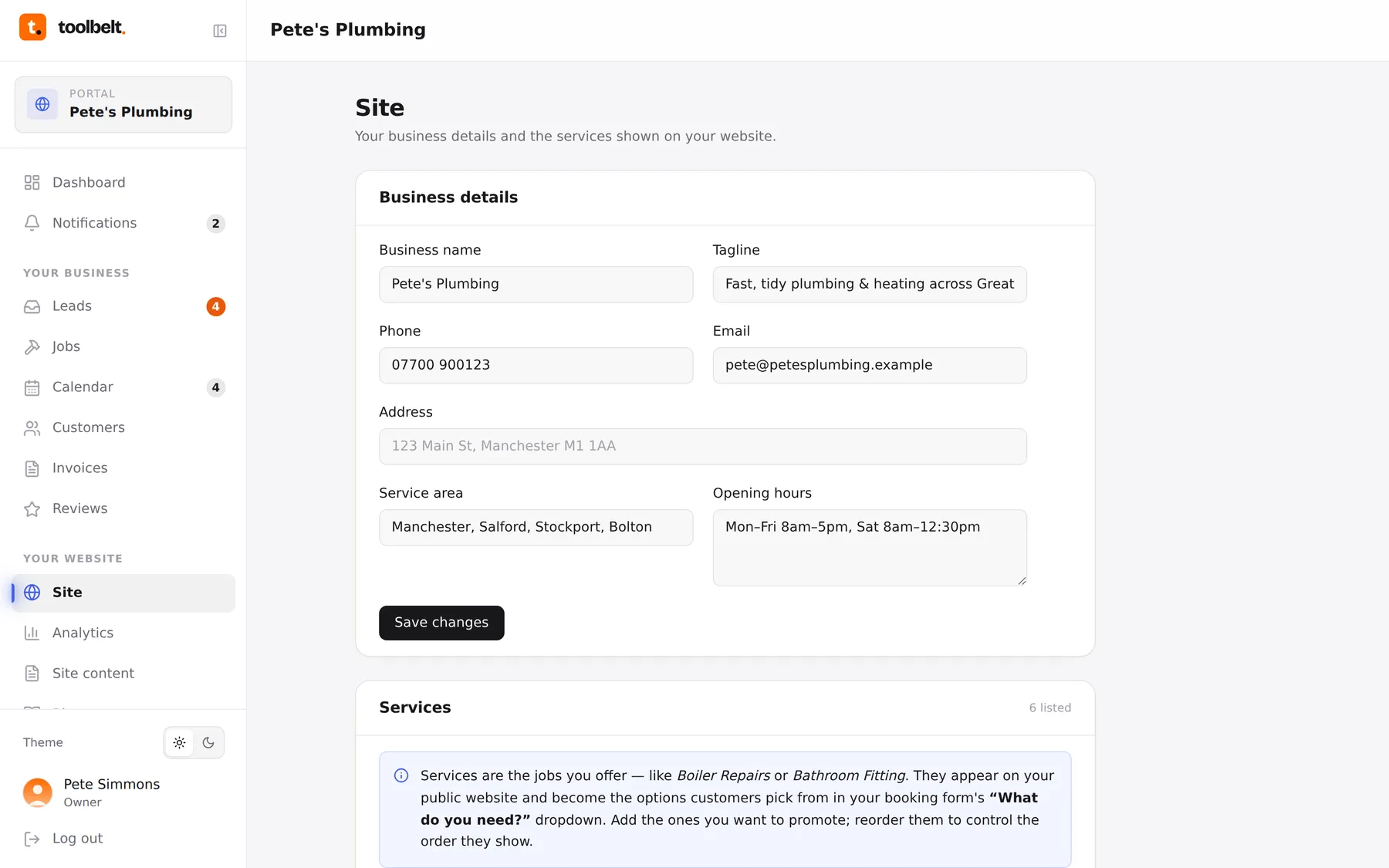
The facts your website runs on: business name, phone, email, hours, service area, and your services list, which doubles as the options on your booking form. Change a fact here once and it updates everywhere it appears on the site.
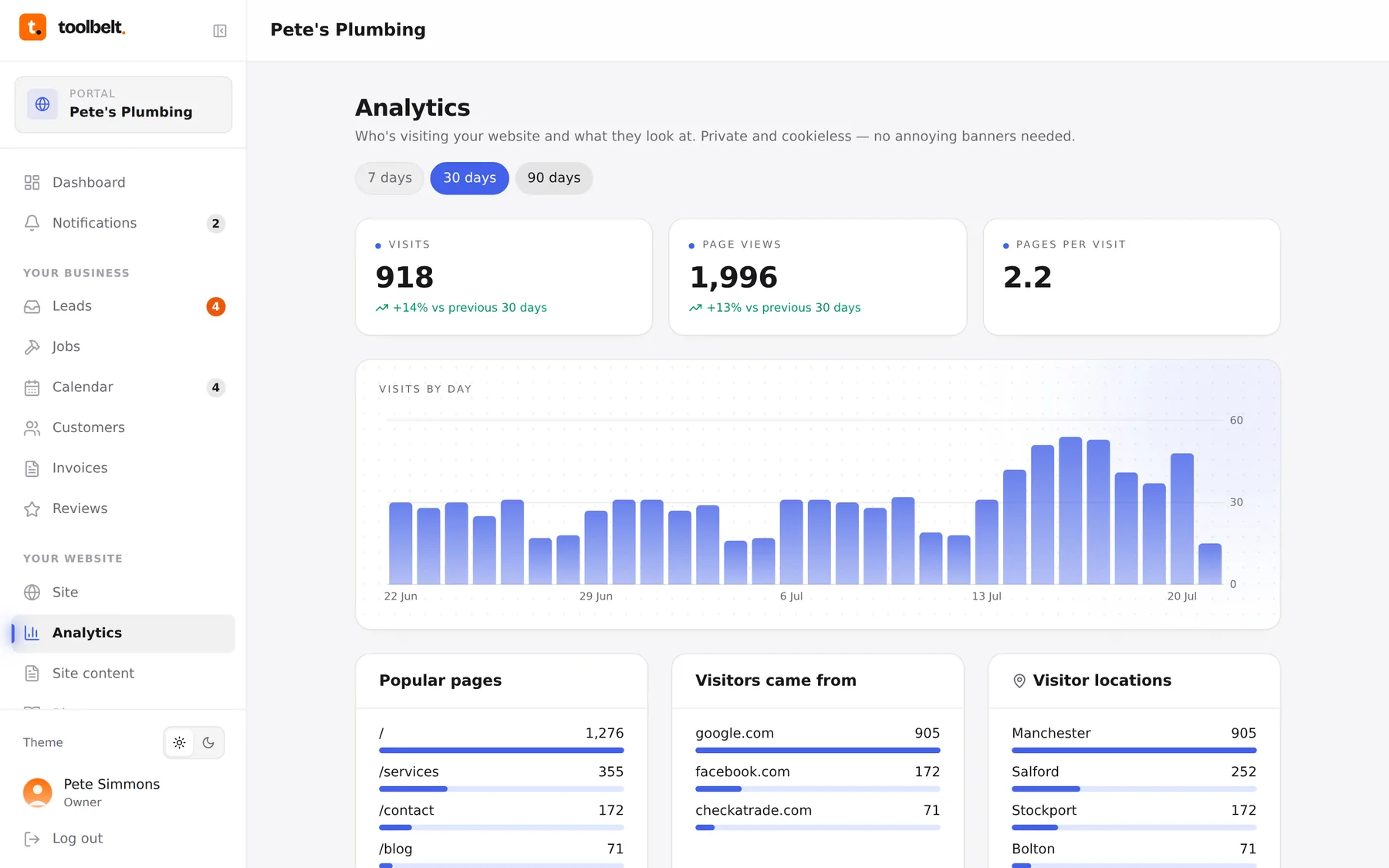
Who's finding your website: visits over 7, 30 or 90 days, your most-read pages, where visitors came from and roughly where they live. Privately measured, no creepy tracking, no cookie banner. Check it monthly and let the trend, not the daily wobble, tell the story.
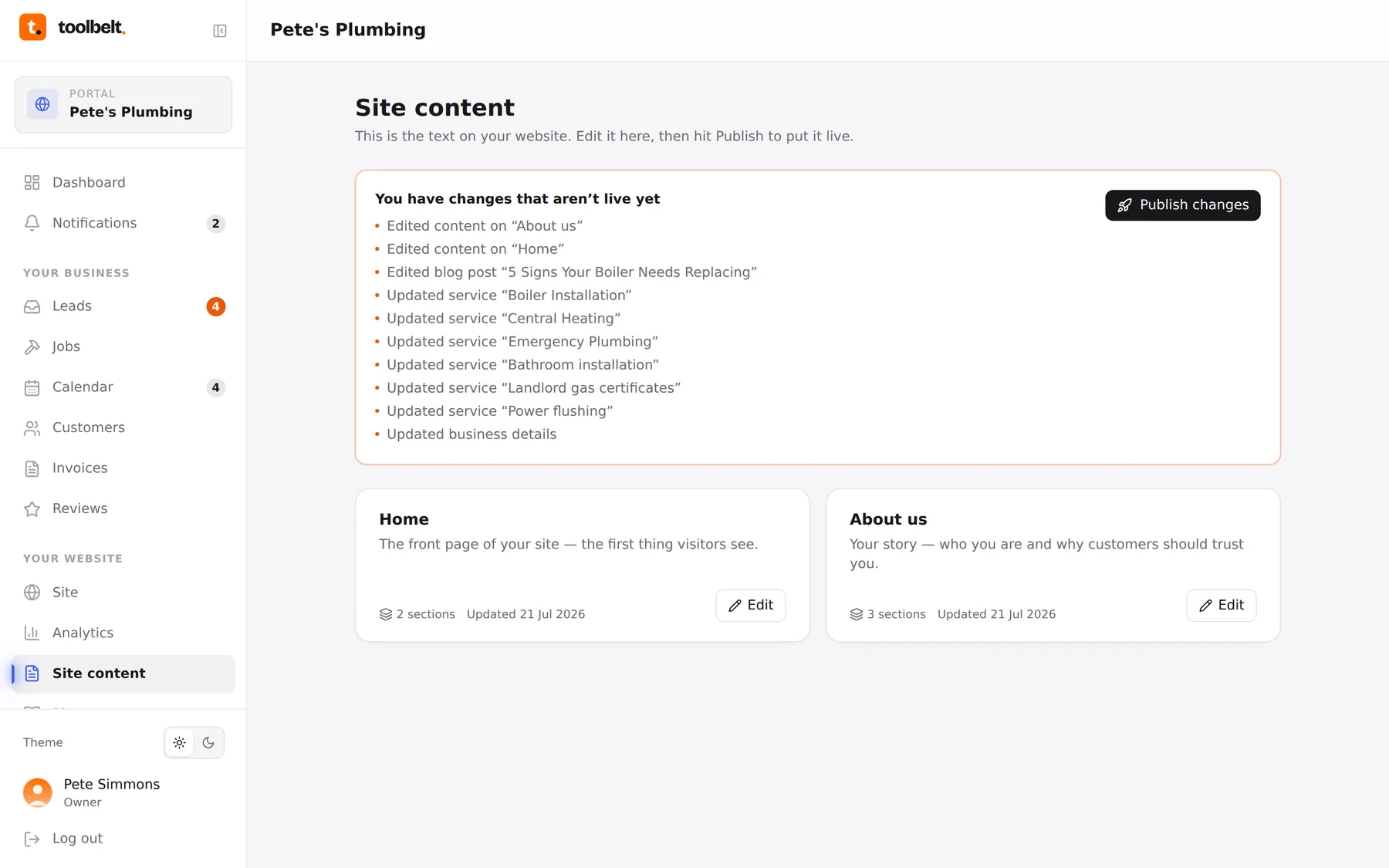
Every page of your website, section by section, editable in labelled boxes, the design holds itself together so you can't break anything. The pending-changes card keeps score of what's saved but not yet live, and the Publish button presses it all out to the real site in one clean build.
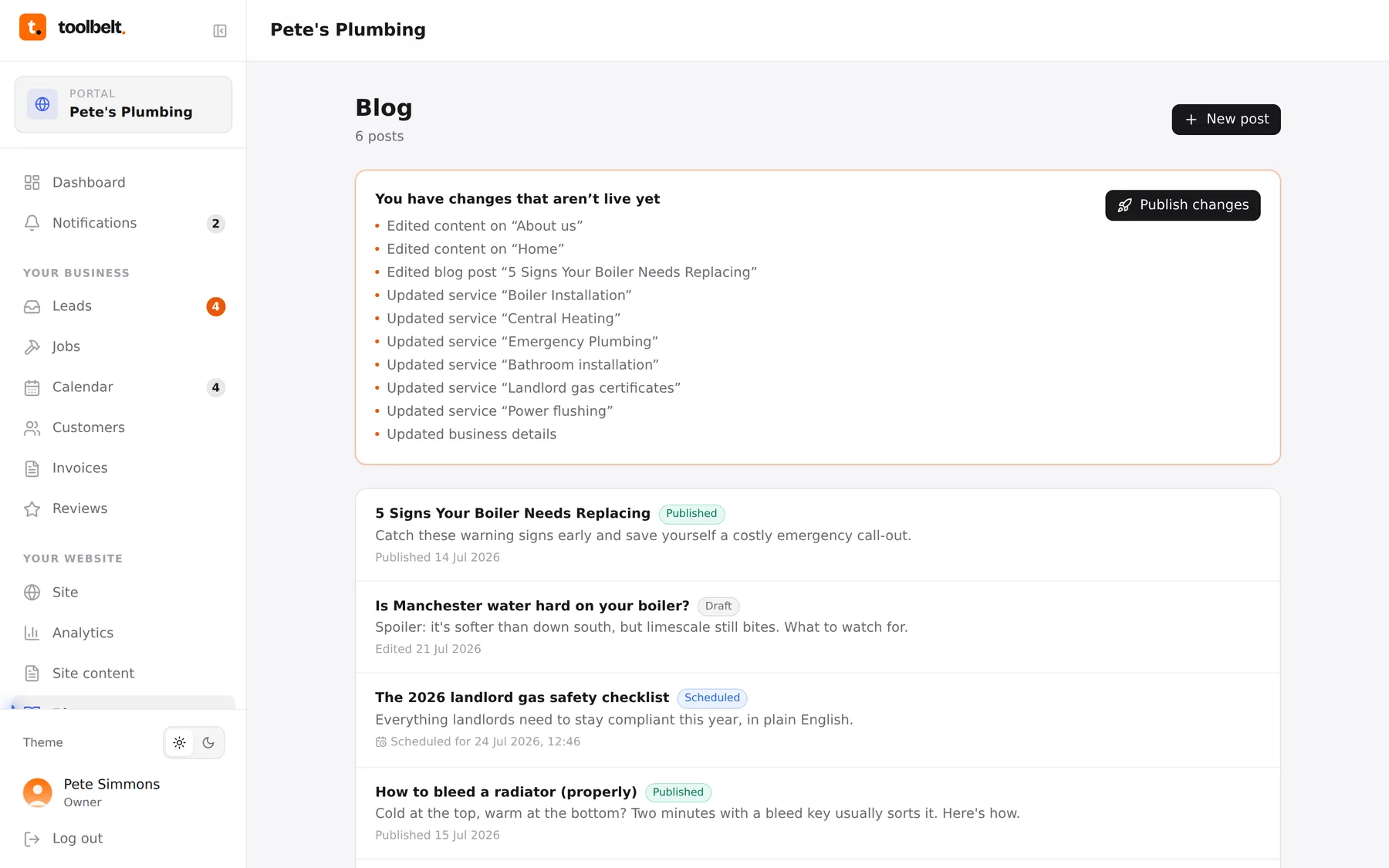
Your posts, draft, scheduled and published. The editor works like a document, not a code screen; write the questions you answer on the phone every week and let Google do the rest. Edit or unpublish anytime; delete only what you never want back.
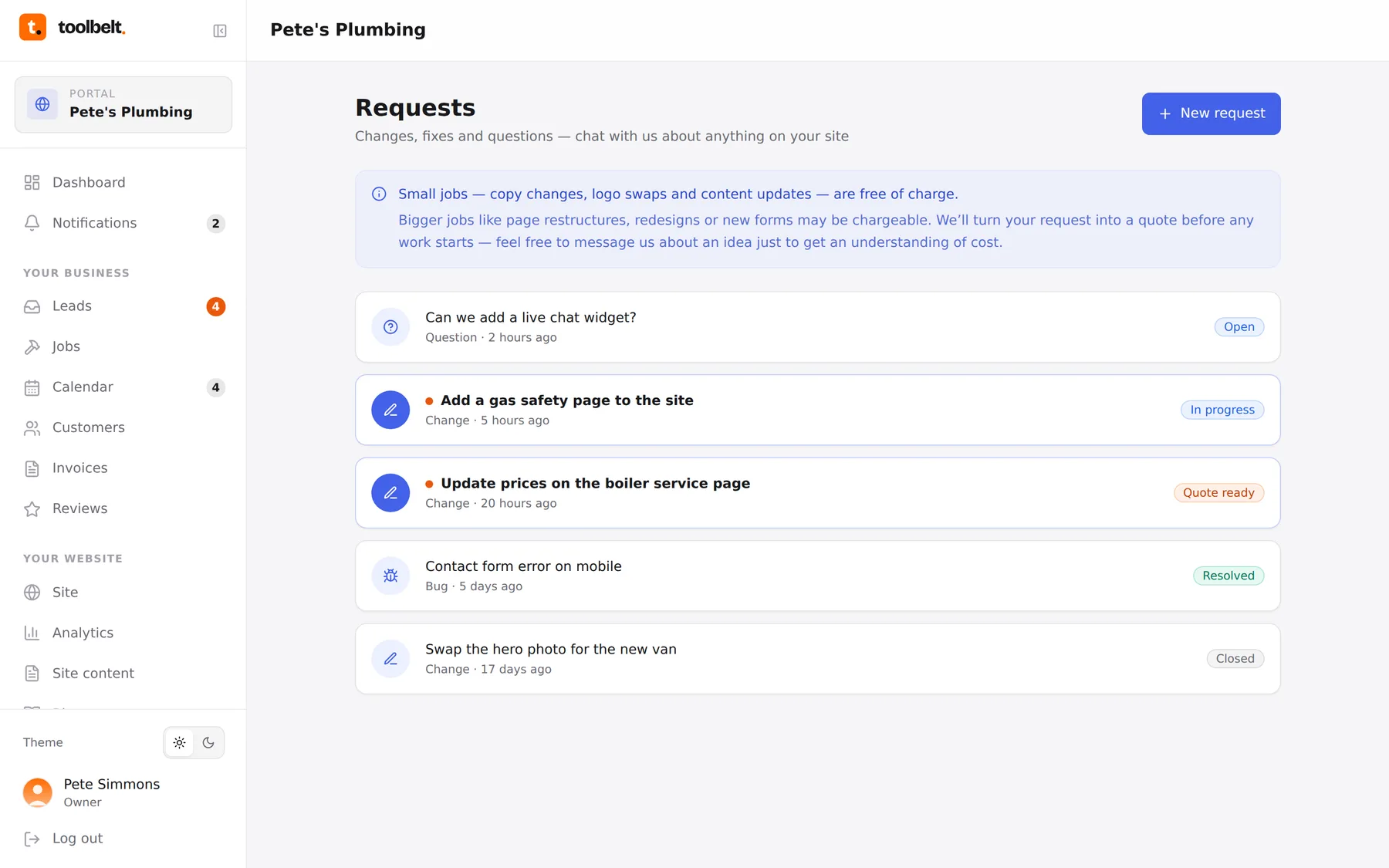
Your direct line to us for anything on the website you can't (or don't fancy) doing yourself. Each request is a chat thread; bigger jobs get quoted in credits inside the thread before any work starts. Nothing gets lost, and the badge tells you when we've replied.
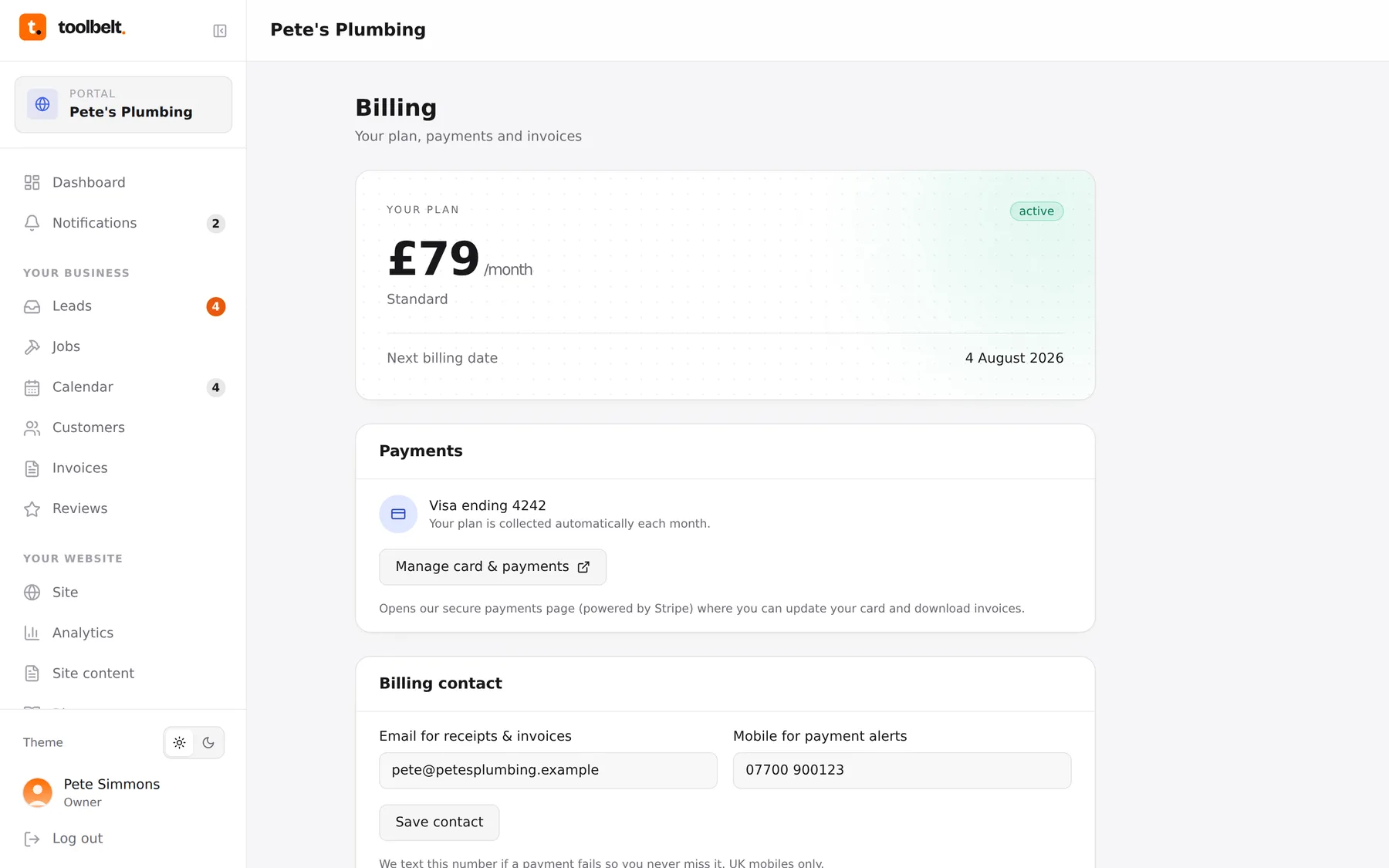
Your Toolbelt plan: the price you're locked in at, your billing day, the card we collect from (managed on a secure Stripe page), and every invoice we've ever sent you. Price history included, because you shouldn't have to trust our memory.
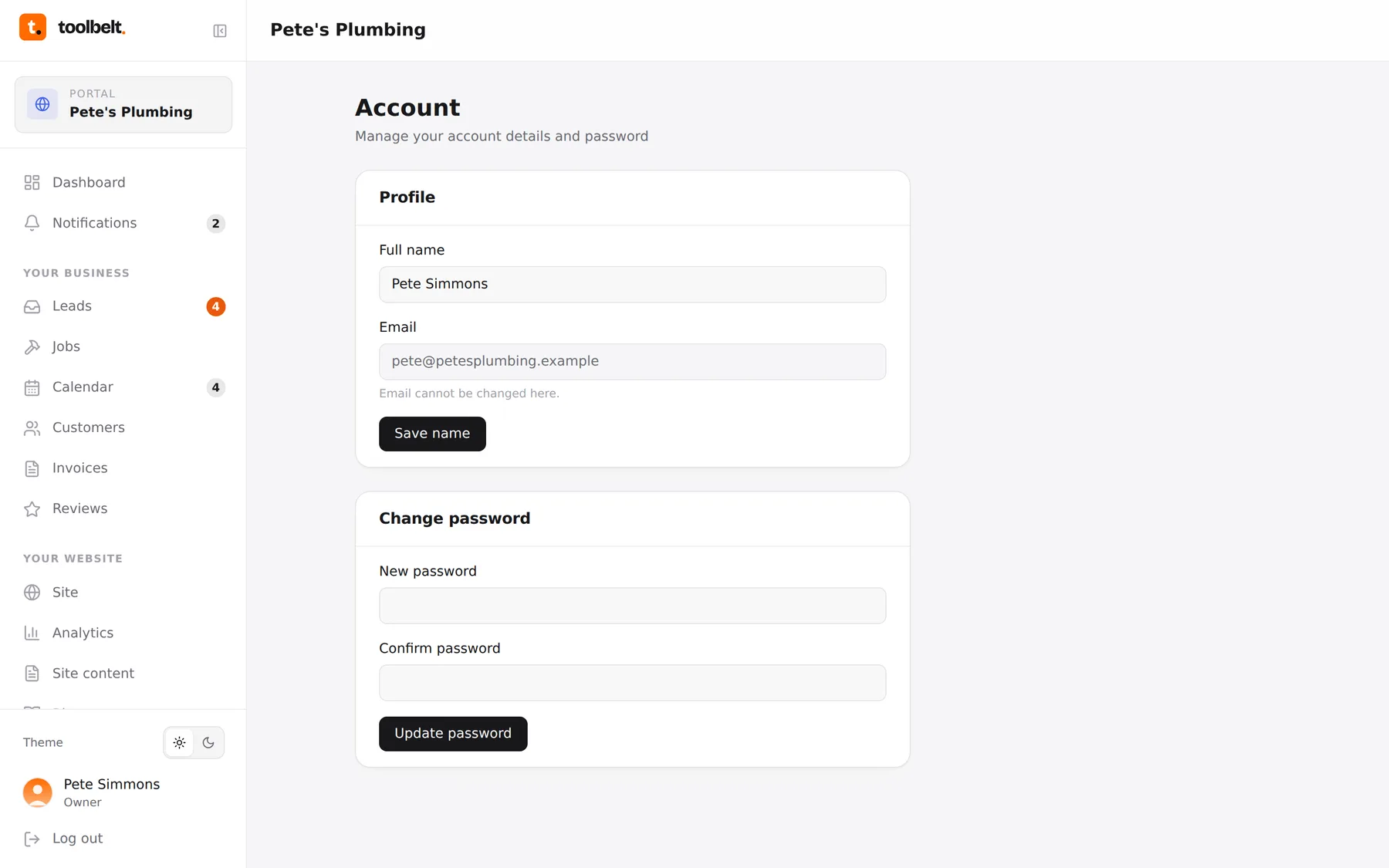
You: your name, your password, and the team, owners see everything, managers run the day-to-day, members get the calendar and their own jobs. Everyone signs in as themselves, so "who did what" always has an answer.