Day rates for UK trades in 2026: what to charge (with calculator)
Typical UK day rates for electricians, plumbers, carpenters and builders in 2026 — plus a calculator that works out the rate your business actually needs.
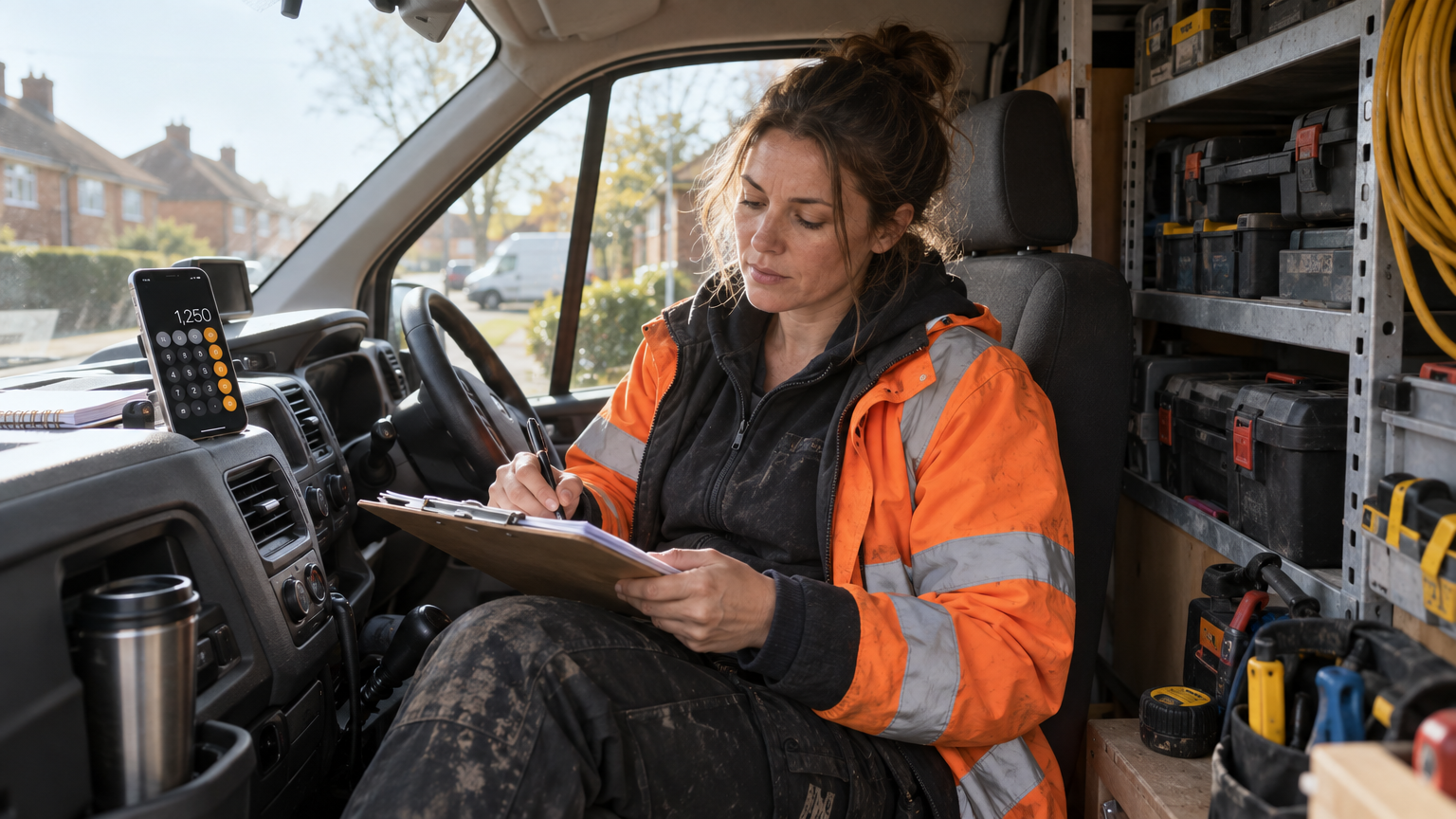
Most trades set their day rate the same way: ask what the other lads charge, knock a bit off to be safe, and hope it works out. Then the van needs tyres, the insurance renews, and January is quiet — and the rate that sounded fine in the pub doesn’t cover the year.
Here’s what UK trades are actually charging in 2026, and a calculator that works out the number your business needs — not the pub’s.
What UK trades charge in 2026
These are the published national ranges from the big cost guides. Regional reality: London and the South East sit at or above the top of each range; Wales, Northern Ireland and the North East nearer the bottom.
Two things jump out. The spread within each trade is enormous — the top of most ranges is 40–70% above the bottom. And the difference isn’t skill: it’s positioning. The electrician charging £500 a day isn’t twice the electrician — they look like the safer choice, so they never have to be the cheapest.
Work out the rate your business needs
Forget averages for a minute. Your rate has one job: cover your life, your costs and your quiet weeks, from the days you actually bill. Play with the numbers:
Most people who run their real numbers through this get a shock: the honest break-even is £40–£80 a day above what they’re charging. Every day booked below your floor is a day you paid to go to work.
Why the same job gets quoted at £250 and £450
The customer can’t inspect your wiring or your pipework before they hire you. They judge what they can see:
- Proof — Google reviews, photos of finished jobs, accreditations
- Professionalism — how fast you reply, how the quote looks, whether the website looks like a real business
- Confidence — trades who explain what’s included apologise less about price
That’s the whole trick behind the top of the range. A proper website full of reviews and real jobs isn’t decoration — it’s what lets you quote £420 where the bloke with a Facebook page quotes £280, and still win.
Demand is on your side
If you’re worried there’s no room to charge properly: the industry’s own forecast says otherwise. CITB’s Construction Workforce Outlook estimates the UK needs 239,300 extra construction workers by 2029 — around 47,860 a year — with skilled trades making up nearly half the increase.
Fewer available trades, steady demand. That’s a market where the professional-looking operator sets the price — and everyone else discounts.
Raise the rate, then look the part
If your calculator number is above your current rate, don’t wait for the “right moment” — put it on the next quote. Then make sure everything a customer checks before saying yes (and they do check) backs the price up.
That second part is our job. Get a free mockup of a site that makes your price look like the safe choice.
Quick answers
What is the average day rate for a tradesperson in the UK?
Published cost guides put most UK trades between £150 and £500 a day in 2025–26 depending on trade and region. Electricians typically charge £300–£500, plumbers £320–£480, carpenters £280–£350 and general builders £240–£400. London and the South East run noticeably higher.
How do I work out my own day rate?
Add what you want to earn a year to your annual business costs, then divide by your real number of billable days — working weeks times days actually on the tools, not days in the calendar. Most sole traders bill 3.5–4.5 days a week once quoting, travel and admin are counted.
Should I show my day rate on my website?
Showing 'from' prices or example job prices filters out bargain hunters and builds trust — customers assume the worst when there's no pricing signal at all. You don't need a full price list; a guide price for common jobs works.
Why do customers say my quote is expensive?
Usually because the only thing they can compare is the number. A professional website with reviews, real job photos and accreditations gives them other things to weigh — which is exactly how higher-priced trades win work.